Open Source: Choose Right, Update Carefully
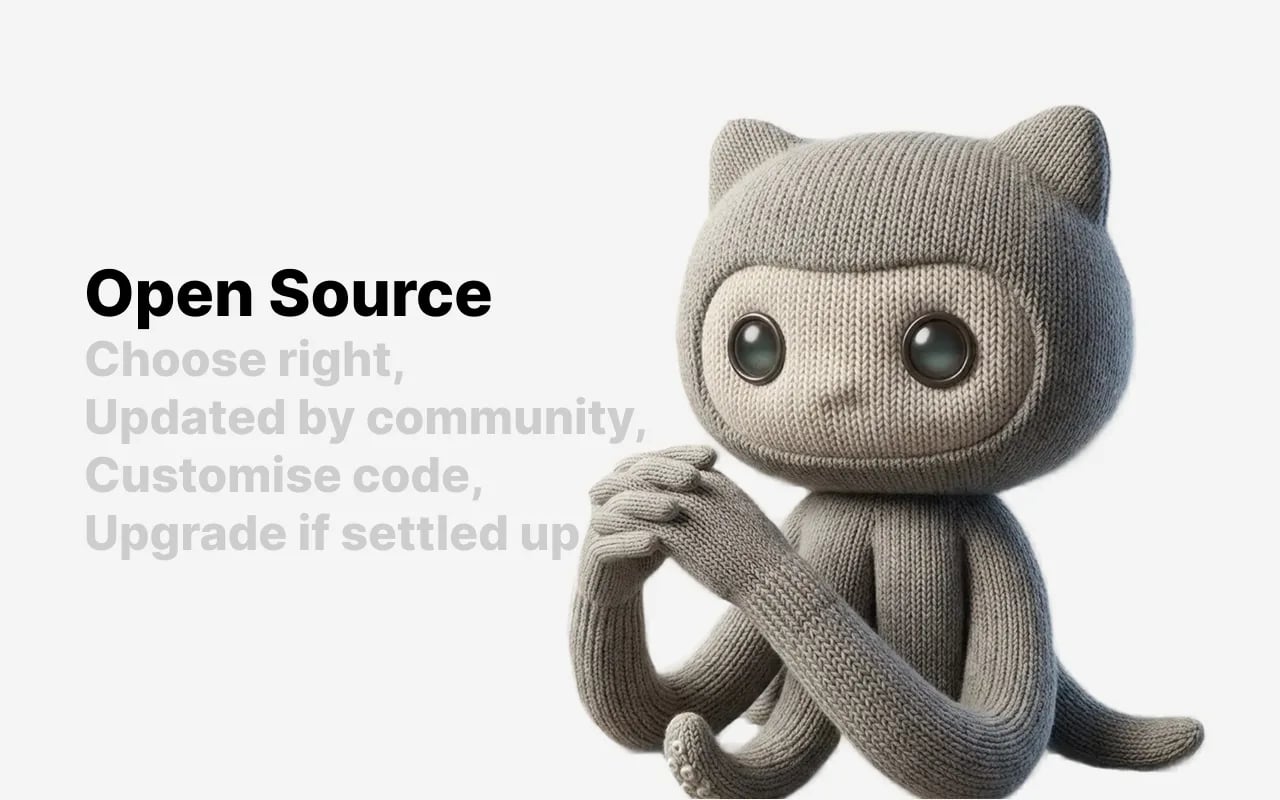
Open Source: Choose Right, Update Carefully
Open source solves most tasks – video streaming, screen sharing, AI automation, data engineering, operating systems. Your job: pick the right tool and maintain it safely.
Check Repository Health
Stars and updates show project vitality. Look at GitHub: 1,000+ stars usually means active community, regular commits mean ongoing development. Avoid projects untouched for over a year – they're dead weight. Dead projects lose their main advantage: community fixes and improvements.
Examples: Apache Airflow gets updates every 2-3 weeks, Spark releases patches monthly, Next.js ships new versions quarterly. Compare with abandoned projects like outdated ETL tools that haven't seen commits since 2022.
Watch for Security Holes
Popular doesn't always mean safe. Apache Spark, Hadoop, Docker, Kubernetes – millions use them, vulnerabilities get patched fast. Smaller projects? Riskier. Some contain binary code you can't audit – any malicious code can hide there.
Check before deploying: Scan dependencies, review recent issues on GitHub, search for known CVE vulnerabilities. PostgreSQL and ClickHouse publish security advisories – read them.
Manage Version Updates
Updates follow semantic versioning: major.minor.patch. Example: Airflow 2.9.1 → 2.9.2 (safe patch) or 2.9.1 → 2.10.0 (safe minor update). But 2.9.1 → 3.0.0? Major breaking changes ahead.
What breaks in major updates:
- Airflow 1.x → 2.x changed DAG definitions, removed obsolete operators
- RabbitMQ 3.x → 4.x altered clustering configuration
- Spark 2.x → 3.x modified DataFrame APIs, deprecated Python 2
- Next.js 12 → 13 introduced App Router, changed routing logic
- PostgreSQL 15 → 16 updated replication protocols
Stay on legacy when needed. Sometimes keeping Airflow 2.8 beats migrating to 3.0 mid-project. Known vulnerabilities hurt less than broken production pipelines. Test major updates in staging first.
Handle Custom Modifications
Your edits complicate updates. Changed RabbitMQ UI? Modified Airflow operators? Added custom Next.js middleware? Updates can:
- Overwrite your changes completely
- Fail health checks because code differs from expected output
- Break dependent services that rely on your modifications
Examples of update conflicts:
- Custom Airflow plugin conflicts with new scheduler logic
- Modified Docker image breaks Kubernetes health probes
- Patched ClickHouse query parser fails integration tests
- Custom Next.js API routes clash with framework updates
Maintain a fork. Track your changes separately, merge upstream updates carefully, keep detailed notes about modifications.
Require Clear Documentation
Good docs prevent installation nightmares. "Works on my machine" isn't acceptable for production systems. You need troubleshooting guides, dependency lists, configuration examples.
Red flags:
- Yandex DataLens: vague installation instructions, unclear error solutions
- Obscure Python packages: missing dependency versions
- Unmaintained Spark connectors: no upgrade paths documented
Green flags:
- Airflow docs: detailed setup guides, troubleshooting sections, version migration paths
- Next.js docs: clear examples, API references, upgrade guides
- PostgreSQL docs: comprehensive configuration options, known issues listed
Compare Available Options
Multiple tools solve the same problem. Workflow orchestration: Airflow vs Prefect vs Dagster. Message queues: RabbitMQ vs Kafka vs Redis Streams. Databases: PostgreSQL vs MySQL vs ClickHouse for analytics.
Evaluate based on:
- Community size (GitHub stars, Stack Overflow questions)
- Update frequency (commits per month, release cadence)
- Documentation quality (setup guides, API docs, migration paths)
- Your stack compatibility (Python/Next.js integration, Docker support)
- Team expertise (learning curve vs immediate productivity)
Start with market leaders. Apache Airflow for orchestration, RabbitMQ for messaging, PostgreSQL for OLTP, ClickHouse for OLAP – proven choices with massive communities. Experiment with alternatives in non-critical systems first.